


Today, helminthiasis are the most common parasitic diseases, the causative agents of which are helminths - two types of worms: flat and round.A characteristic feature of helminthic infestation in the human body is the non-specificity of symptoms, i.e. the signs of the disease match many other pathologies.People are interested in the questions: "How to determine the presence of parasites in the body and can I identify helminths in my intestines at home?"
Signs of helminthiasis
The clinical course of the disease is divided into two stages - acute and chronic.The acute stage begins from the moment the helminth enters the human body and lasts from several weeks to several months.The symptoms of the acute stage develop due to the sensitization of the body - an allergic reaction in response to the introduction of a foreign agent (parasite) and include:
- Increased body temperature.
- Violation of general health.
- Dyspeptic symptoms - diarrhea, constipation, nausea and vomiting.
- Joint and muscle pain.
- Abdominal pain of various places.
- Apathy, loss of appetite, constant fatigue.
- Skin rashes, itching in various parts of the body.
- Enlarged lymph nodes.

The chronic stage is characterized by a wide variety of symptoms, which depend on the type of helminth, its location and the intensity of reproduction.It is characterized by increasing disturbances in the functioning of the gastrointestinal tract, weakened immunity, frequent allergic reactions, nervousness, irritability, weight loss and sleep disorders.Patients often complain: "I often suffer from diarrhea and abdominal pain, I feel exhausted" - such symptoms should prompt the doctor to think about a helminthic infestation.
Even the most experienced doctor cannot make a correct diagnosis based on symptoms alone, so it is difficult to detect worms at home.
Scatological methods for the diagnosis of the disease
All methods for diagnosing helminthiasis can be divided into two types of studies:
- Direct - allows doctors to immediately detect the helminth itself, fragments of its body, as well as eggs or larvae.The infected person's stool, urine, bile, sputum, or blood, as well as tissue and scrapings, are examined.
- Indirect - identify pathological changes in the human body that are a result of the presence of helminths.The method allows the doctor to check the blood picture, the state of the immune system, the structural and functional disorders of the affected organs.Among indirect methods, doctors often use X-rays and immunological diagnostic methods, as well as morphological blood tests.
A common direct method for the diagnosis of helminthiasis is scatological examination, which can be micro- and macrohelminthoscopic.
Macrohelminthoscopy diagnostics make it possible to detect a whole helminth or its parts - segments, cestodes, scolex.Such a study is prescribed by a doctor if the eggs of the parasite are not excreted with the feces or their number is insufficient for detection, for example, when identifying pork or bovine tapeworms, parts of the helminth are visible in the feces, and in case of enterobiasis, whole pinworms are visible.
You can detect parasites or their parts by examining the feces with the naked eye.If it is necessary to differentiate the diagnosis or there are doubts about the reliability of the findings, the feces are additionally examined with a magnifying glass or microscope.
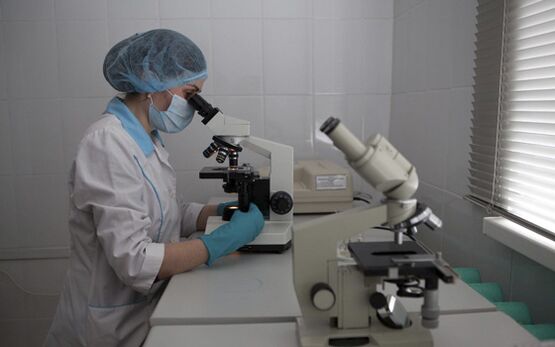
Microhelminthoscopy is so named because of the use of a microscope.It allows you to identify the larvae or eggs of parasites in the feces, which are prepared in a special way on a glass plate before microscopy.The study is quite reliable and allows the doctor to differentiate certain types of helminths from each other.
Special diagnostic methods for various forms of helminthiasis
You can find out if you have certain types of parasites in your body using certain diagnostic methods.The choice of method is made by the doctor based on clinical data.
Tape diagnosis
Detecting porcine or bovine tapeworm is quite difficult today, because parts of the parasite are often not excreted from the body in feces.The doctor can use the method of scraping from the perianal area and microhelminthoscopy of feces.
Diagnosis of enterobiasis
How can I identify the parasites in my body that cause enterobiasis?The study is carried out in the morning, without washing the perianal area.The simplest method is perianal scraping using a wooden spatula or a cotton swab dipped in glycerin solution.The resulting material is transferred to a glass slide, which is then examined under a microscope.
A modern type of scraping is taking material using adhesive tape, for example, scotch tape, cut into strips 9-10 cm long.The tape is applied with the sticky side to the perianal folds and smoothed with a spatula, after which it is carefully removed and moved to a glass slide.It is important to paste it carefully, without air bubbles, to avoid distortion of the research results.
Microscopy of intestinal contents makes it possible to identify not only intestinal parasites, but also those found in the liver and gall bladder during opithorchiasis, fascioliasis and other invasions.
Sputum examination for the diagnosis of pulmonary forms of helminthiasis
To identify parasites located in the lungs and trachea, sputum is examined, which is applied to a special plastic plate or glass and covered with another glass on top.First of all, the material is examined with the naked eye, and only after that a microscope is used.
Muscle tissue studies in trichinosis and cysticercosis
To identify larval forms of Trichinella, a small piece of gastrocnemius or biceps muscle is surgically removed, separated into individual fibers in the laboratory, and placed between two glass slides with the addition of glycerin.When microscopy of a tissue sample, Trichinella larvae are clearly visualized.
Cysts are also identified after taking muscle or subcutaneous tissue.With the naked eye you can see a small bubble up to 2 cm in size.This bubble is crushed, its contents placed between glasses and put under a microscope to determine the viability of the resulting parasites.
Diagnosis of schistosomiasis
For the detection of schistosomiasis, urine collected in the middle of the day is used as material.
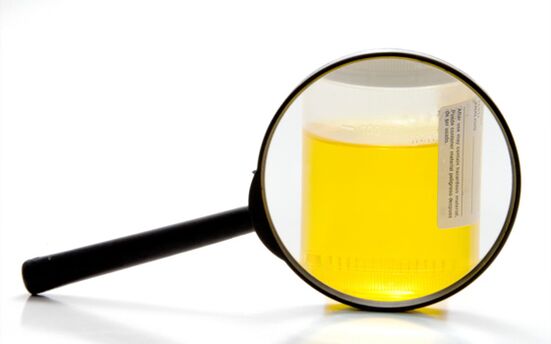
In addition to urine, the material can also be feces, which undergo specific processing and microscopic examination.
Immunological methods for the diagnosis of helminthiasis
The most modern methods for identifying helminths today are various immunological studies.Similar diagnostic methods are suitable for helminthiasis, the causative agents of which are located in the tissues themselves or are at an early stage of development and spread throughout the human body through the bloodstream.Skin and intradermal tests are considered an informative method, which can reveal the presence of parasitic antibodies.
Direct immunological diagnostic methods include:
- Immunofluorescent antibody reaction (IFA) for the detection of cysticercosis and trichinosis.
- Ring precipitation reaction in the diagnosis of trichinosis.
- Latex agglutination reaction for the diagnosis of alveolar coccosis and echinococcosis.
- Immunoenzymatic reaction in the diagnosis of echinococcosis, opithorchiasis, trichinosis and alveolar coccosis.
Self-diagnosis of helminthiasis – is it possible?
Is it possible to check for the presence of parasites in the body at home, without the help of experts?The answer to this question is categorical - no.All existing methods of computer diagnosis of the body, advertised on the Internet, as well as other uncertified and scientifically unsubstantiated methods, are not able to identify the pathogen and make a correct diagnosis.In addition, refusal of medical treatment in favor of "non-traditional" methods of diagnosis and treatment can lead to dangerous consequences, including disability and death of the patient.You should not neglect scientific developments and try to make a diagnosis yourself - this can be dangerous.At the first suspicious symptoms, it is better to consult a doctor.